
The $6.9 Million Question — What HBCU Football’s Money Games Are Really Buying
The checks can fund an athletic department. The score, schedule and national image still carry a cost. In 2026, HBCUs are getting a clearer look at both sides of the ledger.
By MFNGraphics • September 15, 2026 • Sports Business
Projected 2026 guarantee money
At least 15 Division I HBCU-vs.-FBS games were reported to collectively generate more than $6.9 million.
Cash — What does the department actually net?
Development — Does the game make the team better?
Exposure — Who sees the HBCU brand, and how?
Cost — What are the physical, scheduling and brand risks?
There is a reason HBCU football keeps scheduling guarantee games: the revenue is significant and it can support far more than one Saturday.
That makes the 2026 debate more complicated than “stop playing Power Four teams.” The useful question is whether each school is pricing the entire transaction correctly.
This season has supplied a sharp sample: three reported guarantees or compensation packages around $600,000 or more, three losses by at least 60 points, and two games in which the fourth quarter was shortened.
Three checks. Three visible costs.
| Program / opponent | Reported compensation | Result | What followed |
|---|---|---|---|
| Florida A&M at Miami | ~$760K package | L, 77–7 | 856–107 yard gap; 10-minute fourth quarter; second game in five days. |
| Morgan State at Arizona State | $600K reported | L, 70–7 | 681–188 yard gap; fourth quarter shortened to 10 minutes. |
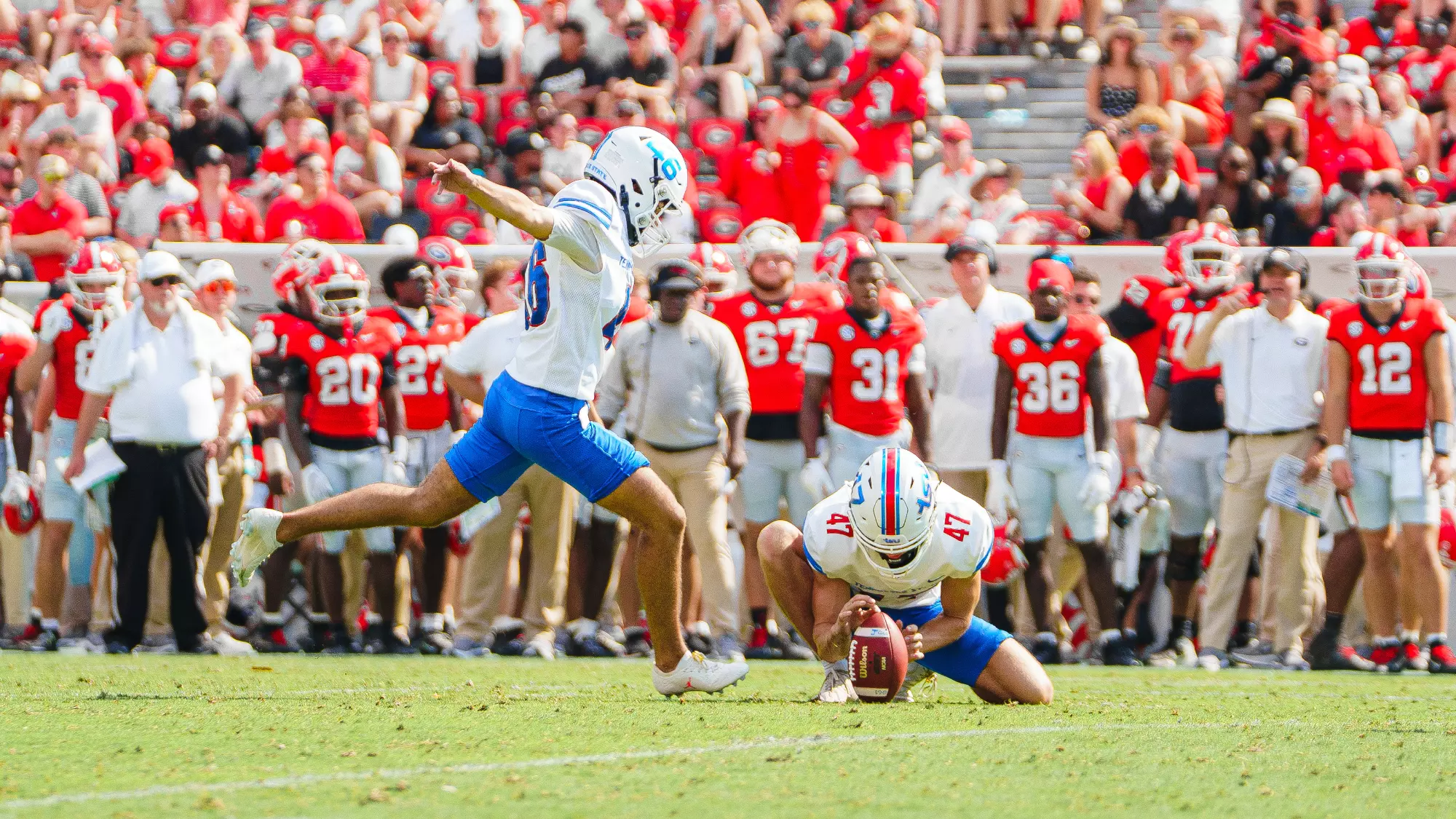
| Tennessee State at Georgia | $600K reported | L, 63–3 | 660–109 yard gap; first meeting between the programs. |
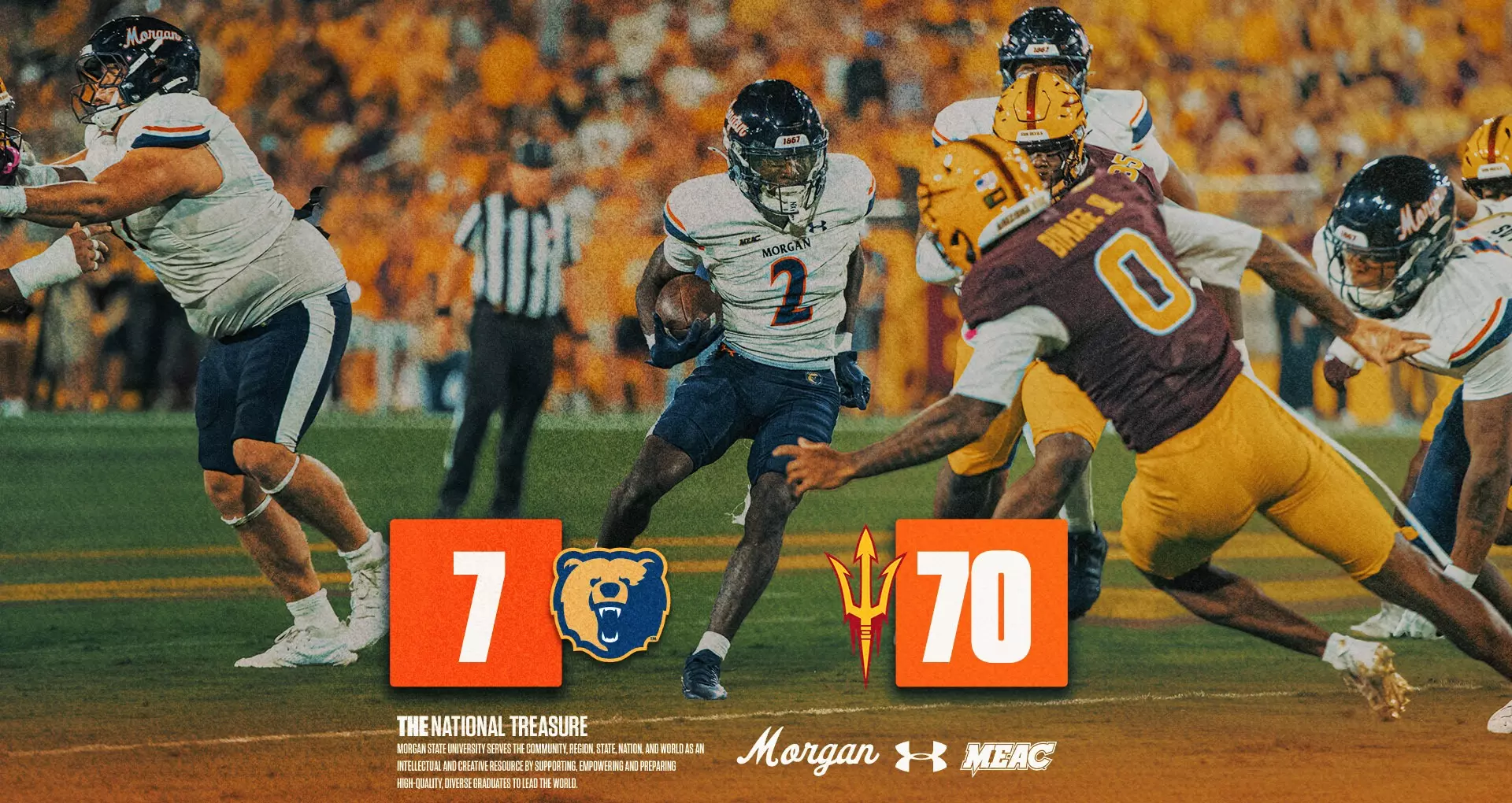
Morgan State at Arizona State. The Bears received a reported $600,000 guarantee and lost 70–7. Photo: Morgan State University Athletics.
The business case is easy to understand
Guarantee checks can fund travel, scholarships, equipment, staffing and non-revenue sports. A preseason payout list reported by HBCU Sports projected at least 15 Division I HBCU-vs.-FBS games to collectively generate more than $6.9 million in 2026.
That is why simply saying “do not play the game” misses the financial reality. The money can matter to the entire department.
FAMU showed how quickly the cost becomes visible
Florida A&M played No. 7 Miami only four days after facing South Carolina State in the Orange Blossom Classic. Miami won 77–7, finished with 856 yards to FAMU’s 107 and held a 42–4 advantage in first downs. The teams agreed to play a 10-minute fourth quarter.
HBCU Gameday reported FAMU’s overall compensation package at roughly $760,000, including a separate component tied to the Marching 100. Both sides of that transaction are substantial: the revenue and the nationally visible 70-point defeat.
Morgan State turned the debate into an image
Arizona State led Morgan State 70–7 after three quarters. Morgan coach Damon Wilson asked about shortening the final period, and the teams played 10 minutes instead of 15.
Morgan’s own recap said Arizona State scored touchdowns on its first seven possessions and outgained the Bears 681–188. The reported guarantee was $600,000.
The check can support real institutional needs. The image of an HBCU team reducing the remaining playing time while down 63 points is also part of the transaction.
Tennessee State’s coach says the number should be higher
Tennessee State received a reported $600,000 for its first game at Georgia and lost 63–3. Georgia outgained TSU 660–109.
Coach Reggie Barlow later argued that HBCUs playing elite Power Four opponents should push for guarantees closer to or above $1 million. His framing is useful: the question is not “money game or no money game,” but what is the correct price for the risk?
Photo: Tennessee State University Athletics
Four columns belong in the real ledger
01 • CASH
What remains after travel, lodging, band, staffing and other expenses? Gross guarantee is not the same as net value.
02 • DEVELOPMENT
Does the opponent create useful film and experience, or is the resource gap so large that development stops being the main outcome?
03 • EXPOSURE
What platform, market, ticket inventory, content access, band presence and sponsor value come with the game beyond the base check?
04 • COST
Injury risk, recovery time, schedule compression, competitive confidence and national brand perception all belong in the price.
The Edward Waters example explains why net matters
After Edward Waters lost 66–14 at Jackson State, university president Zachary Faison said the school received about $65,000, spent roughly $30,000 to $35,000 on expenses and cleared only around $30,000. His conclusion was that future games against much better-resourced opponents would have to produce a larger net return.
That distinction matters at every level. The headline number is the guarantee. The usable number is what remains.
The Marching 100 line item is more important than it looks
FAMU’s reported Miami package included separate compensation connected to the Marching 100. That matters because an HBCU matchup’s market value is larger than the football team alone.
Bands, alumni culture, rivalry history, social reach and institutional identity help make these events attractive. If those assets increase the event’s value, they should be priced into the agreement.
A bigger check does not fix a bad date
FAMU’s Miami game came four days after the Orange Blossom Classic. The same payout after a normal recovery week would be a different transaction. Scheduling, travel and the opponent’s competitive level can change the value of the same dollar figure.
The best deal is not always the largest check. It is the check paired with the right date, opponent and supporting terms.
The strongest HBCU deal is not simply the biggest guarantee. It is the agreement that prices everything the school is giving up — and everything it brings.
HBCU athletic departments need revenue, and these checks can materially support programs across campus. But 2026 is showing why the price has to account for more than the final score.
The next evolution is treating guarantee games like full brand/business agreements: calculate net revenue, understand the exposure, protect the product, negotiate every asset and decide what level of competitive risk is actually worth selling.
HBCU Sports — 2026 guarantee-game payout list ↗
HBCU Gameday — FAMU/Miami money-game calculation ↗
HBCU Gameday — Morgan State/Arizona State ↗
HBCU Sports — Reggie Barlow on guarantee pricing ↗
Florida A&M Athletics — Miami recap ↗
Morgan State Athletics — Arizona State recap ↗
Tennessee State Athletics — Georgia recap ↗
More HBCU sports, design and culture from MFNGraphics.
© 2026 Made From Nothing Graphics LLC. All rights reserved.